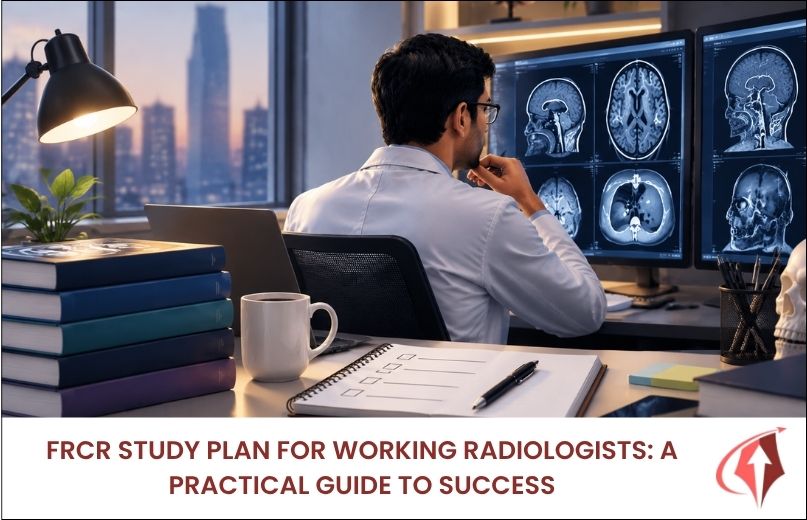
Balancing a demanding clinical workload with FRCR preparation is one of the biggest challenges radiologists face. Whether you are a trainee on a busy rota or a consultant managing reporting lists, on-calls, and multidisciplinary meetings, finding consistent study time feels almost impossible. Yet thousands of working radiologists pass the Fellowship of the Royal College of Radiologists (FRCR) every year by following structured, realistic plans rather than heroic marathon sessions.
Understanding the Challenge for Working Radiologists
Working radiologists typically face:
- Long clinical shifts and irregular hours
- Limited continuous study blocks
- Mental fatigue after reporting
- The need to maintain clinical performance while preparing
Traditional full-time study schedules rarely work. Success comes from consistency over intensity, short focused sessions, and active practice rather than passive reading.
For the Final FRCR 2B, candidates need strong skills in:
- Rapid reporting / short cases
- Long case reporting
- Viva (oral examination)
The viva tests radiological knowledge, observation, clinical reasoning, safety, management, and communication. Recent exam reforms have further emphasised structured communication and clinical decision-making.
Core Principles of an Effective FRCR Study Plan for Working Radiologists
- Prioritise consistency – 45–90 minutes most days beats occasional marathon sessions.
- Focus on active learning – Case practice and speaking aloud matter more than re-reading textbooks.
- Protect peak energy times – Use early mornings or quieter evenings for demanding tasks.
- Integrate preparation with work – Discuss interesting cases with colleagues and practice structured reporting during clinical lists.
- Track progress weekly – Adjust the plan based on weak areas rather than following a rigid template.
Suggested 12–16 Week FRCR Study Framework
Phase 1: Foundation Building (Weeks 1–4)
Focus on consolidating core knowledge across major systems (chest, abdomen, MSK, neuro, paediatrics, trauma).
Daily: 30–45 minutes of targeted reading or high-yield notes + 3–5 short cases.
Weekend: One longer mixed session reviewing differentials and management.
Phase 2: Skill Development (Weeks 5–10)
Shift heavily toward exam-style practice.
Weekday routine example:
- 20–30 minutes: Short cases / rapid reporting practice
- 20–30 minutes: One oral-style case discussion (speak answers aloud)
- 10–15 minutes: Review mistakes and model answers
Weekend: Timed long cases + full viva-style practice sessions.
Phase 3: Exam Simulation & Refinement (Weeks 11–16)
Increase timed practice and mock conditions.
Aim for weekly targets such as multiple short-case packets, several long cases, and regular viva practice. Identify recurring errors (under-calling, over-calling, weak differentials, unclear communication) and correct them deliberately.
Making Viva Preparation Realistic for Busy Schedules
Viva practice is often the most neglected yet highest-yield area for working candidates. Passive watching of cases is not enough – you must practise presenting findings, differentials, and management under time pressure.
This is where FRCR VIVACITY becomes particularly valuable. The platform (YouTube channel focused on FRCR 2B viva) offers:
- Regular case-based viva sessions that mirror exam conditions
- Expert-led discussions covering multiple subspecialties
- Structured teaching that trains observation, reasoning, and communication
- Flexible access so you can watch or participate around clinical duties
- Weekend and open-house style sessions suited to working professionals
Many candidates find that joining or regularly following these sessions builds confidence, improves presentation style, and exposes them to a wide range of cases without needing to organise everything themselves.
If you are a working radiologist preparing for the Final FRCR and struggling to fit effective viva practice into your schedule, start incorporating structured case discussions today.
Explore the regular sessions and extensive video library on FRCR VIVACITY.
Subscribe to our YouTube channel for more videos and updates!
Frequently Asked Questions
1. How many hours per day should a working radiologist study for FRCR
Most successful candidates manage 45–90 minutes on weekdays and longer sessions on weekends. Consistency matters far more than total hours.
2. How long does FRCR 2B preparation usually take for practising radiologists?
Many working radiologists benefit from 4–6 months of focused, structured preparation, especially if balancing full clinical duties.
3. Is viva practice possible without a study partner?
Yes. Speaking answers aloud to yourself, recording yourself, or following structured online sessions (such as those on FRCR VIVACITY) are effective alternatives.
4. What is the biggest mistake working candidates make?
Relying mainly on passive reading or watching cases without actively practising structured oral answers and timed reporting.